The Best Version of Dark Side of the Moon Is the Atmos Mix and It’s Not Close
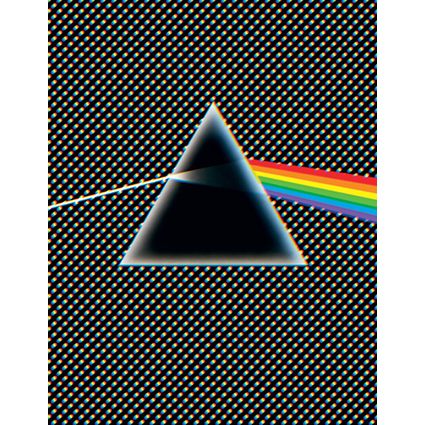
Dark Side of the Moon is the album I’ve heard more times than any other. I own it in more formats than I care to admit out loud on a public website. After spending time with every significant version of it that exists including the original stereo CD, the 1973 quad mix, the 2003 SACD, the 2011 Immersion box, and the 2023 Atmos Blu-ray, I have a clear opinion about which one sounds best.
The Atmos version. It’s not close.
I want to explain why, because it’s not just “more speakers.” The reasons are specific and they get into how the album was recorded and how each format handles what’s actually on the tape. This is also, by necessity, a post about what changes between formats and what doesn’t, which I think is more useful than a simple ranking.
The Formats, In Order
1973 Original Stereo
Alan Parsons engineered the original recording at Abbey Road. I was just there in May on a trip and took some pictures of the famous crosswalk. The stereo mix Alan and the band produced is genuinely excellent, detailed, atmospheric, and remarkably wide for a two-channel mix from 1973. It’s probably the best recording of that time period. The problem isn’t the mix itself. It’s that the album contains more information than two channels can hold without a lot of EQ carving and compromise. Parsons was working with what he had, and what he had was two speakers.
The stereo mix has been remastered several times. The 2011 remaster is crisper than the original but some listeners including me find it slightly brighter in the high end than sounds natural. The 2023 remaster on the 50th anniversary disc, available at 24/192 on the Blu-ray stereo layer, is warmer and closer to what the original tape sounds like. If you’re listening in stereo, the 2023 remaster is the version to have. But you’re still hearing a compression of the original sources into two channels, and on an album this spatially conceived, that has consequences.
1973 Original Quad Mix (Alan Parsons)
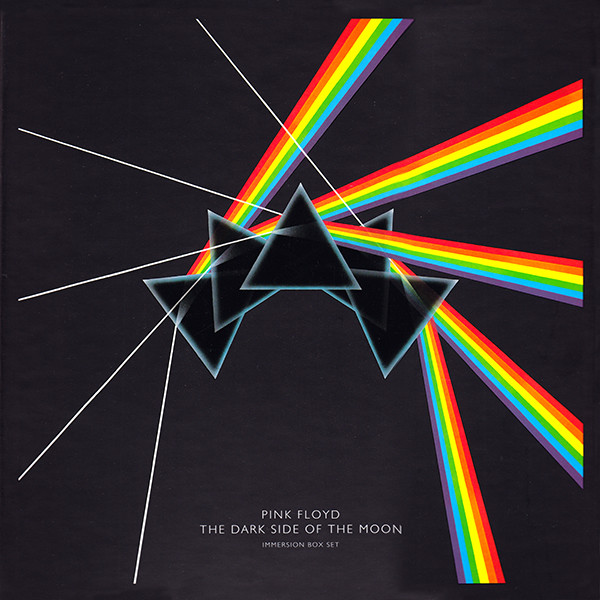
This one is a historical curiosity more than a listening recommendation, but it deserves mention because it’s genuinely interesting and because most people who care about this album have never heard it.
Parsons made a 4.0 quadraphonic mix of the album in 1973, released on quadraphonic 8-track and SQ matrix vinyl. The format died commercially before most people had the hardware to play it, and the mix stayed largely unheard until it appeared on the 2011 Immersion box set in digital form. It’s a 4.0 mix so no dedicated bass channel, no center channel, made with the technology and aesthetic of 1973, which means the spatial decisions are different from what you’d make today. Some QQ community members prefer it to the Guthrie 5.1 on the grounds that it has more of the original analog character and more aggressive channel separation. I find it fascinating for about twenty minutes and then I want to listen to a version that sounds like a finished product rather than an artifact.
Worth hearing once if you have the Immersion box. Not a daily driver.
2003 SACD (James Guthrie 5.1)
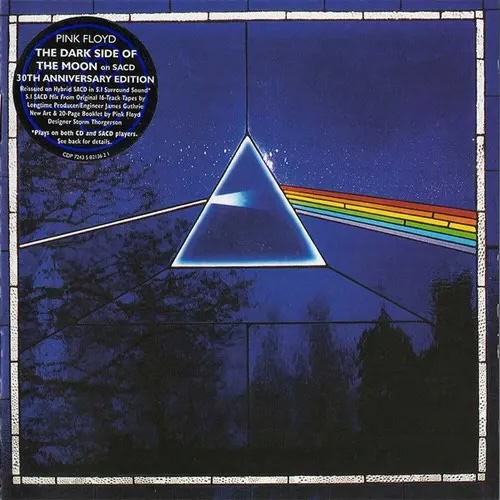
This was the first time most people heard Dark Side in proper surround, and for twenty years it was the definitive version. It still holds up. Guthrie mixed it from the original analog multitracks and kept the signal path in the analog domain until the final DSD conversion, which matters. You’re hearing the original tape character, not something that went through unnecessary digital conversion in the middle of the mix process.
The 5.1 mix is conservative in the best sense. Guthrie didn’t reach for dramatic spatial effects. The footsteps on the opening run around the room. The clocks on Time ring from multiple positions. The cash register on Money is distributed across the five speakers in a way that makes sense physically. But the core of each song stays centered and grounded, which is the right call for material this carefully constructed.
The hybrid SACD disc has a CD layer (standard resolution stereo), a stereo SACD layer, and a multichannel SACD layer with the 5.1 mix. The multichannel DSD layer is the one that sounds best on that disc. If you have an SACD-capable player and you’ve been playing the CD layer, you’ve been missing the point of owning it.
The 2003 5.1 mix also appeared on the 2011 Immersion box Blu-ray, this time in PCM at 96kHz/24bit rather than DSD. The Immersion Blu-ray sounds essentially identical to the SACD multichannel layer to my ears, which is what you’d expect given that the 5.1 mix master is the same source.
If you only own the stereo CD and you’ve never heard this, the 2003 SACD is the second biggest upgrade available to you. But it’s not the biggest.
2023 50th Anniversary Blu-ray (James Guthrie Atmos)
This is the one.
Guthrie returned to the original multitracks for the 50th anniversary and made a new mix from scratch — not an upmix of the 2003 5.1, a completely new mix built for Atmos and the twelve-speaker system it implies. The Blu-ray has the Atmos mix in TrueHD (with the 5.1 core for older hardware), the 2003 5.1 at 96kHz/24bit for comparison, and the new stereo remaster at 24/192.
What makes it better than the 5.1 isn’t just the ceiling speakers, though those matter a lot on an album like DSOTM. It’s that Atmos’s object-based approach lets Guthrie place sounds in three-dimensional space rather than routing them to fixed speaker channels. The difference in practice: the heartbeat that opens the album doesn’t just come from “the surround speakers.” It’s behind you and slightly below you, which is where a heartbeat you’re inside would actually be. The coins in Money don’t arc from one speaker to another, they move through space continuously. The synth on Any Colour You Like rotates around the room in a way that the 5.1 version approximates but doesn’t quite achieve because it’s routing to fixed points rather than tracking a position.
Richard Wright is the biggest beneficiary. His keyboards and organ were always slightly buried in the stereo mix because there were only two channels and Gilmour’s guitar and Waters’ bass needed to be there too. The Atmos mix gives the keyboards their own space in the room, separate from the guitars and vocals, and suddenly you hear how much Wright was doing on every track. The Great Gig in the Sky is the obvious example but it’s true across the whole album.
I’ve used Dark Side as a demo track for this blog before and I’ll keep using it. Not because it’s spectacular, though it is, but because it’s an album everyone knows so well that the differences between how it sounds in each format are immediately audible even on a first listen. If you put someone in front of a properly set up Atmos system and play them the 2023 mix, they hear things in an album they’ve owned for decades that they’ve never heard before. That’s not a format gimmick. That’s the recording finally having enough room to be itself.
What Actually Changes Between Formats
Since I’m a mixing engineer I want to be specific about this rather than hand-wavy.
Stereo to 5.1: The biggest change is the separation of reverb and room sound from the dry signal. In stereo, the reverb on Gilmour’s guitar has to share the left-right image with the guitar itself. In 5.1, the reverb can go to the rear channels while the dry guitar stays in front, which is how sound actually behaves in a room. This is why the 5.1 mix sounds “bigger” without necessarily sounding different, the elements are the same, they’re just no longer competing for the same space.
5.1 to Atmos: The change here is more subtle but more significant. 5.1 routes audio to fixed speaker positions. If you want something to move from the left speaker to the right speaker, you pan it. Atmos places audio as objects with positions in three-dimensional space and lets the decoder figure out how to render that position on whatever speaker layout you have. The practical result is that movement is continuous and smooth rather than jumping between speaker positions, and height information can be placed specifically rather than being sent to “the ceiling speakers” as a category. On an album this obsessed with the movement of sound through space, that matters more than on almost anything else you could choose to demonstrate it with.
What doesn’t change: The performance. The recording. The arrangement. Every version of this album is the same performance captured at Abbey Road in 1972 and 1973. The mixing decisions change. The format changes. Clare Torry’s vocal on The Great Gig in the Sky is the same take in every version. What changes is how much of the room around her you can hear, and how clearly you can hear what the rest of the band is doing while she sings.
Which One to Buy
The 2023 50th anniversary standalone Blu-ray. It’s about $25, it has the Atmos mix, the 2003 5.1 for comparison, and the best stereo remaster. It replaced every other version of this album in my rotation and I don’t expect that to change.
If you already have the 2003 SACD and you’re happy in 5.1: I’d still say get the Blu-ray for the Atmos mix, but I understand the “I already own it in surround” argument. They’re not the same mix and the Atmos is meaningfully better.
If you only listen in stereo: the 2023 remaster at 24/192 on the Blu-ray stereo layer is the best version of the stereo mix available, so the Blu-ray still wins even if you never engage the Atmos layer.
If you want the quad mix: you need the 2011 Immersion box, which is out of print and trades for more than it’s worth on the secondary market. It’s an interesting historical document. I wouldn’t pay current asking prices for it unless you’re a completist.
The 2023 Atmos Blu-ray extracts cleanly with Lossless Extract TrueHD Atmos with full object metadata intact. The Kodi setup guide covers getting it from your NAS to your AVR correctly, and the multichannel mixes post has more albums worth tracking down once you’ve heard what Atmos can do with this one.