The Multichannel Mixes That Are Better Than the Original

I want to make a specific argument that’s different from anything I’ve written here before, and I want to be careful about how I make it because it’s easy to get wrong.
The argument isn’t that multichannel audio sounds better because it’s multichannel. I already covered that in the Snake Oil post — the format itself isn’t magic, the mastering decisions that go into it are what matter. The argument here is narrower: some multichannel and Atmos mixes are not just spatially enhanced versions of the stereo original. They are different creative works that reveal things the original couldn’t, and in some cases they are the better record.
This is a claim I’d have been skeptical of myself a few years ago. I’m a mixing engineer. I know that a good stereo mix is a craft in itself, and that bad surround mixes often just spread the same elements around the room without any musical reason for doing so. The early stages of the 5.1 era had a lot of those. But the best multichannel work, particularly the Steven Wilson remixes and the more recent Atmos releases, makes a different kind of argument. Not “here’s the stereo mix with reverb coming from behind you.” Something more interesting than that.
Here are the releases that changed my mind.
Steven Wilson’s Remixes of the Classic Prog Catalog
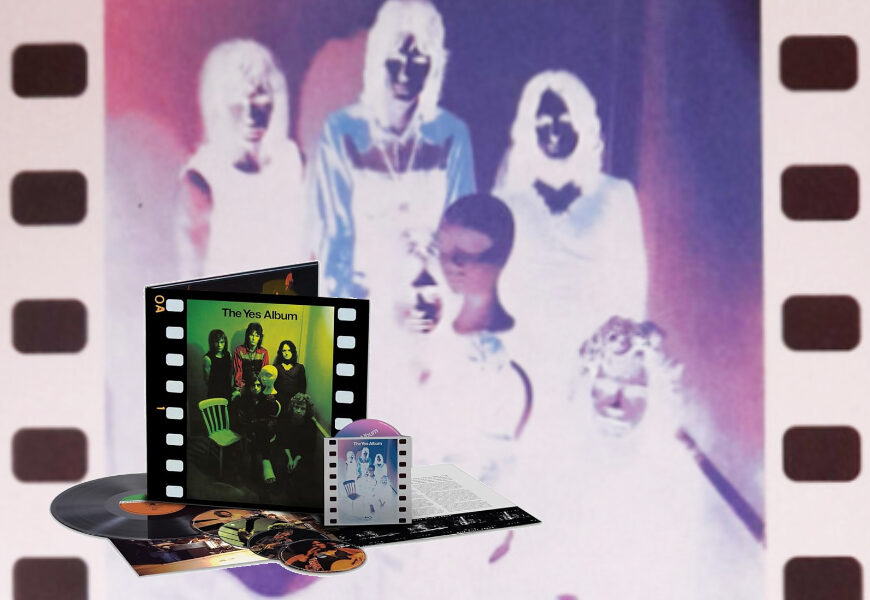
Steven Wilson has spent roughly fifteen years remixing classic progressive rock albums from the original multitracks — Yes, Jethro Tull, King Crimson, Genesis, Emerson Lake & Palmer, Roxy Music. He has access to the original session tapes, which in some cases have not been touched since the 70s, and he makes genuinely considered decisions about what to do with them.
The Yes remixes are where I’d start. Close to the Edge on SACD 5.1 and more recently in Atmos is an album that rewards attention in a way the stereo mix doesn’t quite achieve, not because the stereo mix is bad, but because the original recording is so dense with information that two channels can’t hold it all without compromise. Steve Howe’s guitar parts that were buried in the original mix because there was nowhere to put them are in the room now, clearly placed, doing things you never knew were there. The organ pedal bass that underpins the whole first section of the title track has actual physical presence in a properly calibrated multichannel setup. Chris Squire’s bass, which was always the spine of the band, finally gets to sit in the center of the room where it belongs rather than competing for space in the left right image.
Wilson has said in interviews that his brief to himself for these remixes is to serve the music as it was recorded, not to add drama for drama’s sake. That discipline shows. These don’t sound like a surround novelty. They sound like what the recordings were trying to be.
The Jethro Tull Aqualung 5.1 mix is another one. Ian Anderson’s acoustic guitar passages have a delicacy that gets slightly compressed in the stereo mix because the electric parts need to fit too. The 5.1 version separates them spatially and the acoustic playing that’s always been there is suddenly front and center. Locomotive Breath hits differently when the piano intro is clearly placed and the band arrives around it from multiple directions. Not a gimmick, a decision that serves the song.
Jeff Buckley — Grace (Blu-ray, Dolby Atmos)
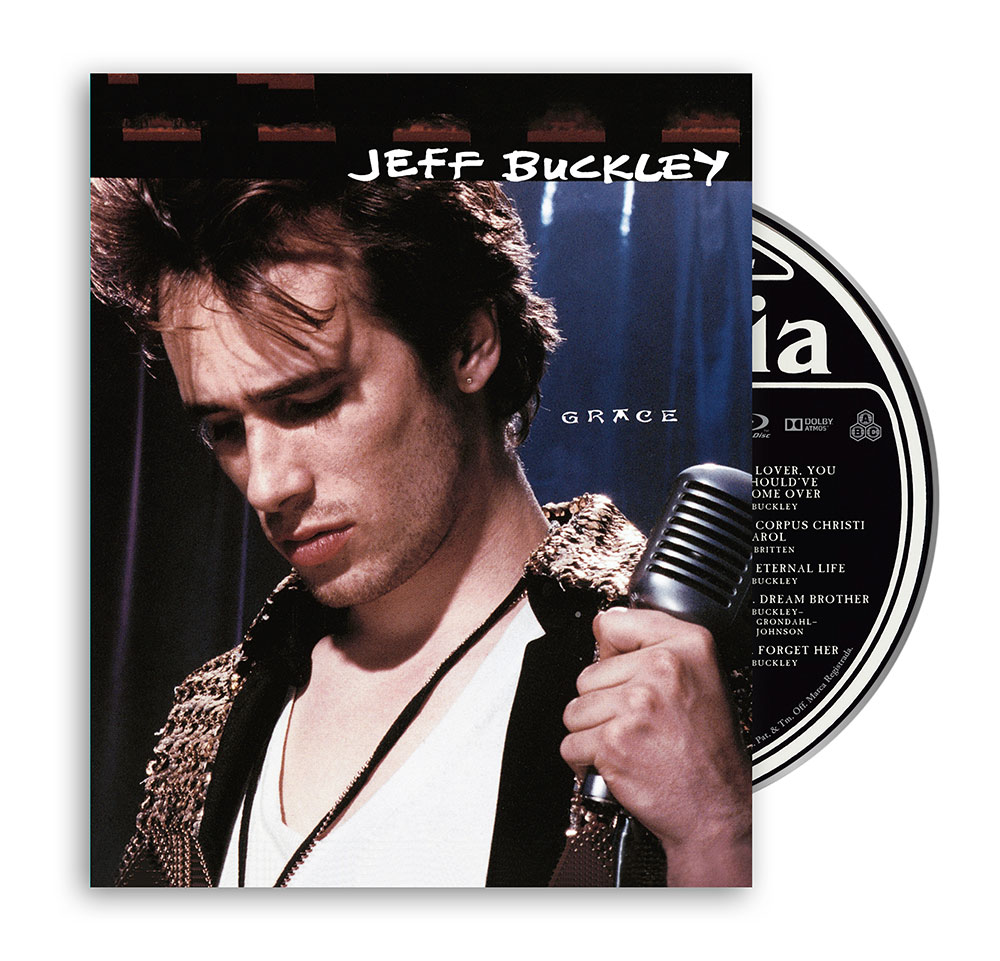
I mentioned this one in the Roon post because it was the disc I’d just picked up. Let me give it the proper space it deserves.
Grace is a record built around Buckley’s voice, that’s obvious, but what’s less obvious until you hear the Atmos mix is how much is happening around that voice in the original recording that the stereo mix has to compress into a narrower space. Andy Wallace’s original mix is not bad; it became the reference version for a reason. But the Atmos remix, done by Steven Wilson from the original multitracks, does something the stereo couldn’t: it puts Buckley’s voice exactly where it belongs, isolated and central, with everything else, the guitar layers, the room, the reverb tails, arranged around it at a distance that makes sense physically. You understand why the room sounds the way it does on these recordings.
Hallelujah is the obvious one to test. The vocal reverb that decays into the room behind Buckley has a physical presence in Atmos that you don’t get from speakers in front of you. Lover, You Should’ve Come Over has string arrangements that were always beautiful but slightly smeared in the stereo image and they have specific locations in the Atmos mix and the arrangement becomes clearer for it. Eternal Life, which is the aggressive rock track on an otherwise delicate album, is genuinely startling when the band is around you and the guitar is overhead.
This is the clearest example I can give of a remix that makes the case I’m trying to make. Not just “the same album with more speakers.” A re-examination of the recording that reveals what was already there.
The Beatles — Abbey Road (Blu-ray, Dolby Atmos)
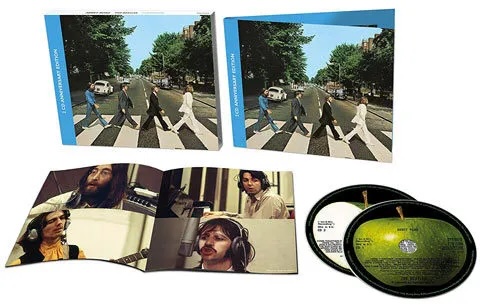
I covered this in the albums post but not from this angle.
Giles Martin’s Atmos mix of Abbey Road is the clearest argument I know for why multichannel matters for catalog rock. The original stereo mix was made in 1969 with the tools of 1969, which meant aggressive panning to left and right with very little in the center beyond the kick drum and lead vocal. That hard left/right separation sounds odd on modern playback, not wrong, just a product of its time and of the way people listened then.
The Atmos mix doesn’t change what was recorded. It relocates it to positions that make more musical sense with modern speakers and modern listening rooms. The three part vocal harmony on Because, John, Paul, and George, is placed around the room in the Atmos mix in a way that lets you hear each voice individually while they’re still clearly singing together. In stereo you hear a blend. In Atmos you hear three people. The information was always in the recording; it just couldn’t be disentangled with two speakers.
The second side medley is where it gets genuinely extraordinary. The End has Paul, George, and John trading two bar guitar solos, something most people know, but in Atmos each guitarist is placed spatially so you’re moving between them as they trade. Ringo’s drum solo circles the room. If you’ve heard this album hundreds of times in stereo and you sit down with the Atmos disc and a proper setup, it’s a different album.
This one requires the 2019 50th anniversary box set since there’s no standalone Blu-ray audio release. Worth it.
King Crimson — In the Court of the Crimson King (Blu-ray, Dolby Atmos)
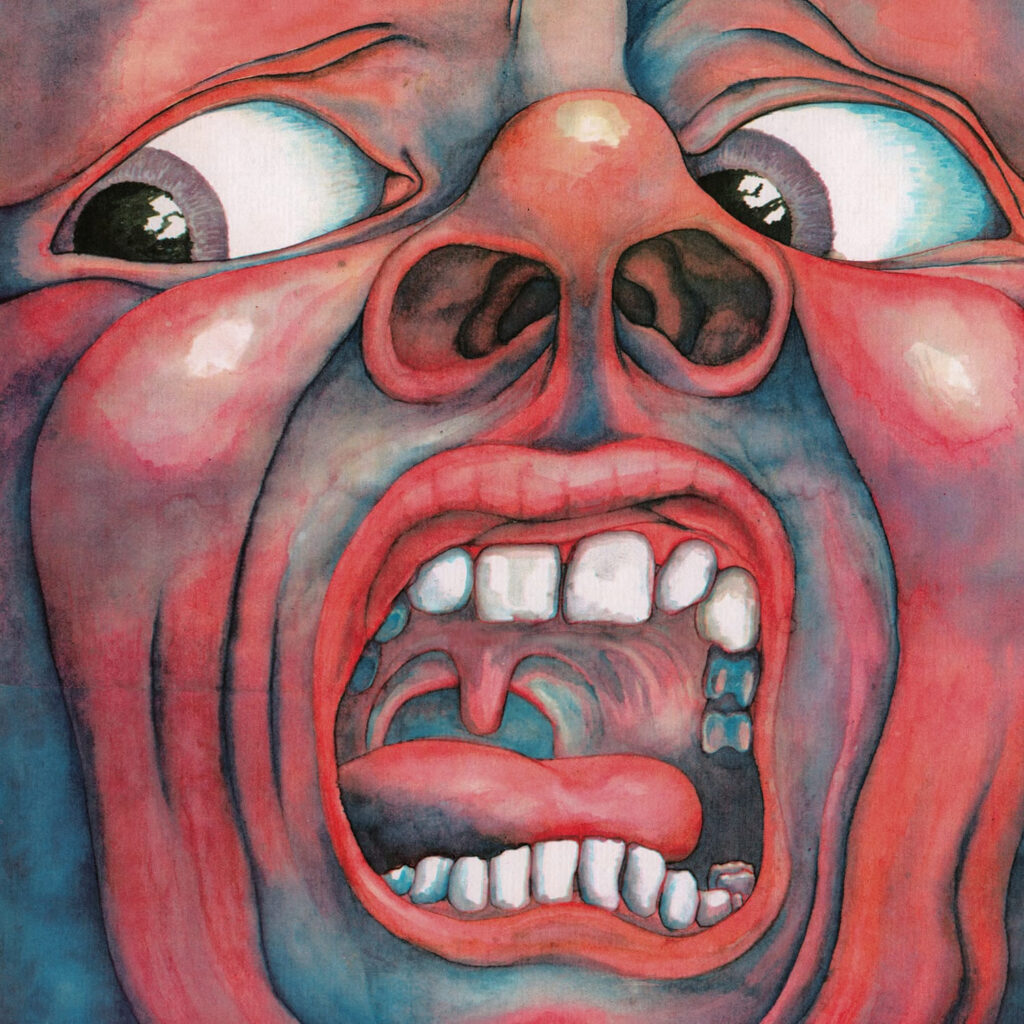
This is a record from 1969 that sounds like it was made last week when you hear it in Atmos, and that shouldn’t be possible.
The original recording is dense, mellotron, multiple guitar layers, complex percussion, and the stereo mix has always been a bit of a compromise because there’s simply too much happening for two speakers to resolve cleanly at loud volumes. The Atmos remix, again by Steven Wilson from the original multitracks, distributes that density across the room and suddenly the complexity that felt like noise in the stereo mix becomes legible. You can hear what each instrument is doing individually.
21st Century Schizoid Man opens the album, and in Atmos the saxophone, guitar, and bass are placed around you rather than stacked on top of each other. The chaos of that track is still there, it’s supposed to be chaotic, but the chaos is now organized in three dimensional space and you can follow threads through it. The title track, which has always been the delicate counterpart to the aggression of the opener, has the mellotron filling the room from behind in a way that makes it genuinely immersive rather than just loud.
This is one of those discs where I genuinely think the multichannel mix makes a better argument for the album than the stereo original. Not because the stereo is bad. Because the recording contains more than two channels can hold.
Joni Mitchell — Court and Spark (SACD 5.1)
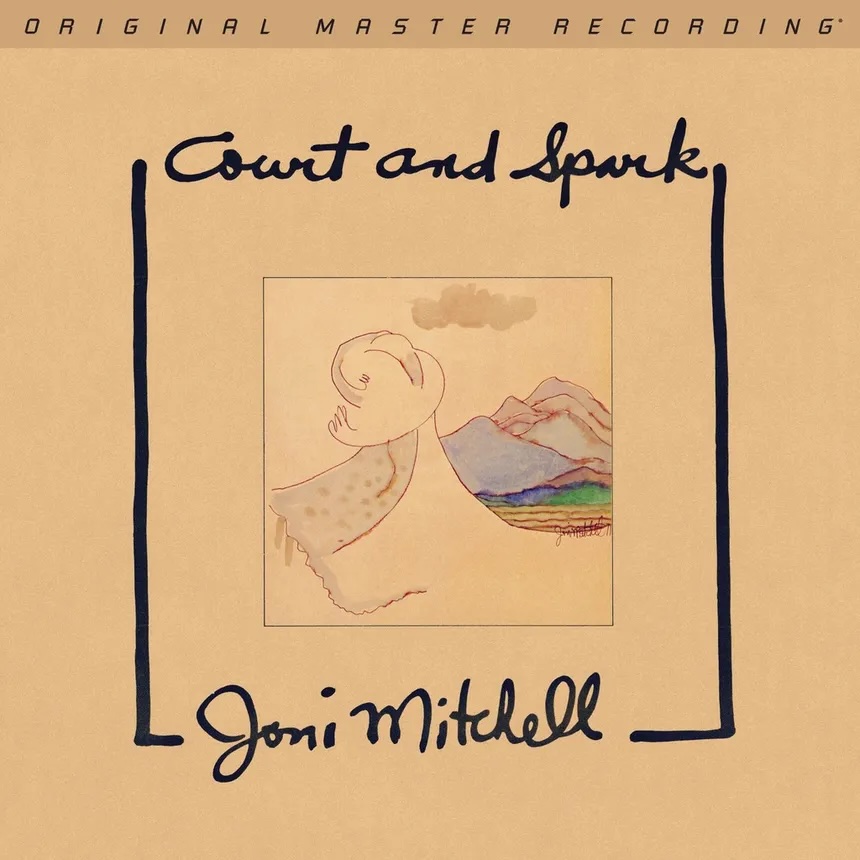
Tom Scott’s jazz fusion arrangements on Court and Spark, saxophone, electric piano, a full band, always sounded slightly crowded in the stereo mix because Mitchell’s voice needs to dominate and there’s a lot of orchestration trying to fit alongside it. The SACD 5.1 version gives the band room to spread out while the vocal stays centered and close, which is where it should be.
The result is that you can hear the jazz influences in the arrangements more clearly than in the stereo mix. The interplay between the rhythm section and the horn parts has physical space to operate in. Mitchell’s voice, which is what the album is about, is no longer competing. It’s sitting in the room with you while the band is around you.
Help Me, Free Man in Paris, Car on a Hill — these are songs that work in stereo and work better in surround. The 5.1 mix is not transformative the way the Atmos discs can be, but it’s a genuine upgrade and it’s the version I listen to now.
Pink Floyd — Dark Side of the Moon 50th (Blu-ray, Dolby Atmos — 2023)
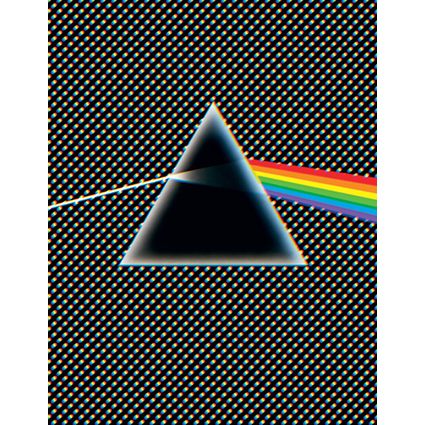
I covered this in the albums post as a demo disc and it is that, but I want to make the stronger argument here: this is the version of the album I listen to now. Not for demonstration purposes. Because it’s better. This is my favorite Atmos disc in my collection.
James Guthrie has been the custodian of the Pink Floyd catalog for decades and the Atmos mix he made for the 50th anniversary does something deceptively simple: it puts you inside the recording rather than in front of it. The heartbeat that opens the album comes from behind you. The clocks on Time are in the room around you rather than ping-ponging between two speakers. The cash register on Money arcs overhead. The synthesizer on Any Colour You Like moves through space in a way that makes the stereo version sound like a sketch of the same idea.
None of that is a gimmick. Every spatial decision Guthrie made is in service of what the album was already doing. Dark Side of the Moon was always about the space between sounds as much as the sounds themselves. The Atmos mix finally has room to make that argument. The standalone Blu-ray audio disc released in late 2023 has the Atmos mix, the 5.1 mix at 24/96, and the stereo at 24/192. About $25 new. It’s the easiest recommendation on this list.
Pink Floyd — Wish You Were Here 50th (Blu-ray, Dolby Atmos — 2025)
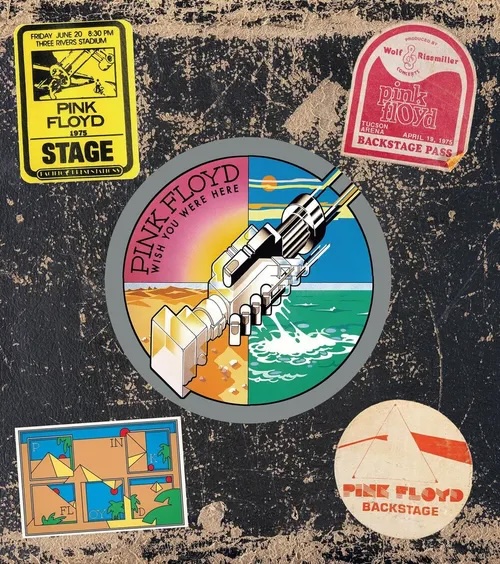
This one I want to be honest about, because honest is what this blog is supposed to be.
The Wish You Were Here 50th anniversary Blu-ray came out December 12, 2025, and the Atmos mix is again by James Guthrie, his third Floyd Atmos mix after Dark Side in 2023 and Animals in 2024. The disc is excellent value: Atmos, the 2009 5.1 mix, the original 1975 quad mix, stereo at 24/192, plus a live bootleg from the 1975 Los Angeles show restored and remastered by Steven Wilson. Around $25 standalone. For the price it’s an easy buy.
The Atmos mix itself is more conservative than Dark Side. Guthrie has talked about wanting to preserve the homogeneous, enveloping quality of the original rather than placing discrete elements aggressively in the room, and you can hear that philosophy at work. Shine On You Crazy Diamond fills the space around you slowly and beautifully, the synth pads and guitar sustains decaying into the room in a way that the stereo can’t quite achieve. Welcome to the Machine has industrial sounds overhead that have always been in the recording but get lost in two channels. The title track is warm and spacious in a way that suits the song.
Where it pulls its punches: the core instrumentation stays fairly centered and close compared to what Dark Side does with similar material. Some reviewers have found the guitar levels on Shine On slightly hot relative to the rest of the mix. I noticed it but didn’t find it distracting. If you’re expecting the same transformation Dark Side delivers, you may find this one more subtle. I’d still call it the best version of Wish You Were Here available, and the inclusion of the original quad mix gives you a fascinating comparison point — a 1975 engineer’s spatial decisions versus a 2025 one on the same album, back to back.
The disc passes my test. You forget about the speakers. That’s enough.
What Makes the Difference Between a Good Multichannel Mix and a Pointless One
Since I’m a mixing engineer I feel like I owe you the honest version of why some of these work and most early 5.1 releases didn’t.
The bad multichannel mixes from the DVD-Audio and early SACD era made one of two mistakes. Either they put the dialogue and lead vocal in the center channel (correct) and then spread generic reverb and ambience to the rear channels (wrong), which sounds fine but doesn’t do anything interesting. Or they went the other direction and put discrete musical elements in the surround speakers for novelty value: a guitar solo appearing from behind you for no musical reason, a drum fill panning around the room. That sounds like a demonstration track, not a piece of music.
The Wilson remixes and the better Atmos releases don’t do either of those things. They make spatial decisions that serve the music: instruments are placed where they make sense relative to each other, room sound and reverb are placed where they’d actually be if you were in the room, and the focus stays on the primary elements of each piece. The surround channels are part of the mix, not an addition to it.
The test I apply: can you listen to this mix without thinking about the fact that it’s multichannel? If the spatial placement keeps calling attention to itself, “that guitar just came from behind me!”, the mixer made a novelty. If you forget about the speakers and just hear music that sounds bigger and more real than usual, they made something worth owning.
Every disc in this post passes that test. There are not that many that do.
The Steven Wilson SACD and Atmos releases are available through the usual channels, SDE shop, Amazon, direct from Burning Shed for the Wilson catalog. The Jeff Buckley Grace Atmos disc was released in early 2026. The Abbey Road Atmos is only in the 50th anniversary box set as noted in the albums post. The Pink Floyd Dark Side of the Moon standalone Blu-ray is widely available for around $25. The Wish You Were Here 50th Blu-ray came out December 12, 2025 and is similarly priced. All of them extract cleanly with Lossless Extract — TrueHD Atmos with object metadata intact, DSD from the SACDs, PCM from anything else.