My Living Room Is Not a Listening Room and Also It Is
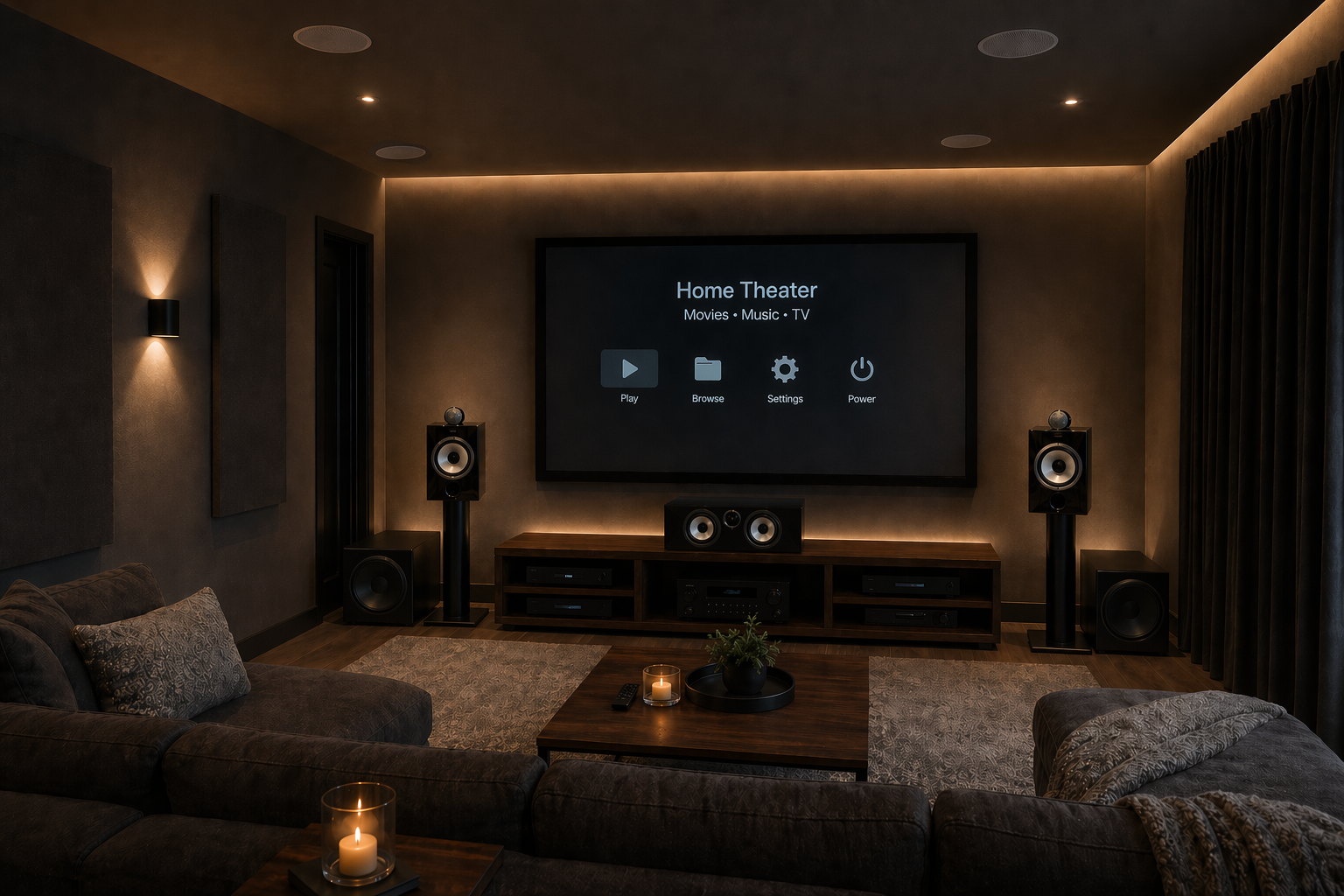
I’m going to describe my lossless Atmos setup because I think it’s useful context for everything else on this blog, and because I find setup posts from people who make audio software suspicious when they don’t include any actual specifics.
The room is a living room, not a dedicated home theater. Hardwood floors, plaster ceiling, fireplace on the front wall which means my center channel and subwoofers live where they live and I don’t have much say about it. I’d have even less say if it was up to my wife! The curtains and the rug are doing acoustic work I did not consciously plan but am grateful for. It is not an overly treated room. It is a room where people also watch television and occasionally sit on a leather sectional without thinking about speaker placement. This is fine.
Speakers
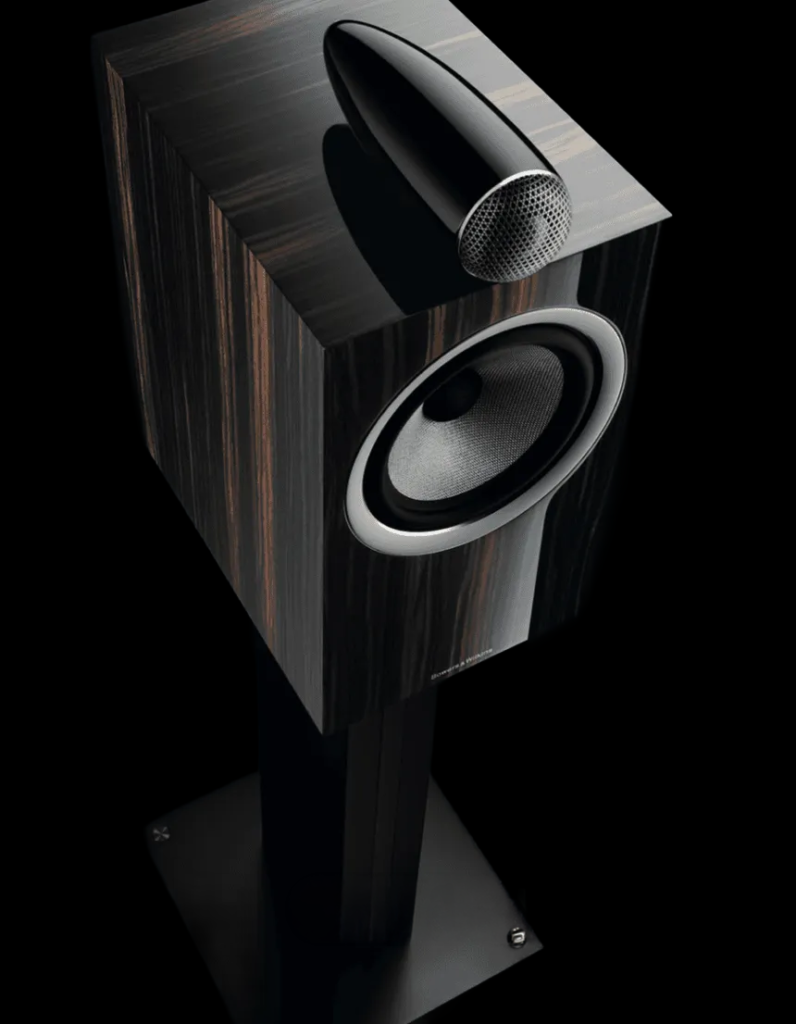
The fronts are Bowers & Wilkins 705 S2s on stands, the surrounds are 707 S2, and the center is a B&W HTM72 from the same family. I went B&W throughout because matching drivers across the front soundstage matters more than most people admit, and because I had heard them at length before buying and knew what I was getting. They are not cheap. They are worth it for what I use them for. The 705 S2 in particular has a tweeter on top of the cabinet that’s not decorative, it’s a decoupled tweeter module that B&W calls Decoupled Double Dome and it genuinely does something for spatial imaging that cheaper speakers don’t approximate.
The subwoofers are two Rythmik LV12s. Dual subs in a living room is not overcorrection. A single sub in an asymmetric room creates bass nulls at certain listening positions. Two subs placed thoughtfully even out the low-frequency response across the room. The improvement is not subtle. If you have one sub and you’ve ever noticed that bass sounds different depending on where you sit, this is why, and two subs is the fix. The Rythmiks are sealed servo-controlled designs which means the bass is fast and controlled rather than the kind of bloomy low end that impresses people at the shop and gets tiring at home. For music which is primarily what this system is for that matters.
The ceiling speakers are in-ceiling Atmos height channels four of them, two front height, two rear height. I don’t remember the exact brand and I’m not going to pretend I do. I picked a decent brand, had them installed properly, and they do what ceiling speakers need to do which is deliver height information that the AVR places audio objects into. The brand matters less than the placement and the calibration. Do not use upward-firing Atmos speakers. They are a waste of money. I’ve said this before. I’ll keep saying it.
Amplification
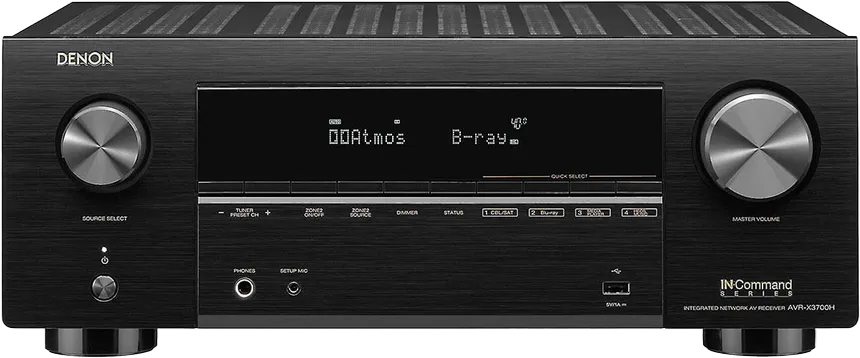
The AVR is a Denon AVR-3700H. It handles decoding, processing, and drives the subs, surrounds, and height channels directly. The front left, right, and center speakers are powered by an Emotiva BASX amplifier off the Denon’s preamp outputs instead.
The reason for this is that the 705 S2s are a speaker that rewards proper amplification. The Denon is a very good receiver but its internal amplifier section is making compromises that a dedicated three-channel amp doesn’t have to make. The Emotiva is not an exotic or expensive amp. It is a clean, powerful, honest amplifier that gives the B&Ws the current they want. The difference when I switched was not a night-and-day revelation. It was the kind of improvement that makes you put on three more albums because the front soundstage got more relaxed and resolved and you want to hear more of it.
The Denon handles everything else: decoding TrueHD Atmos off the HDMI, calibration with Audyssey, driving surrounds and heights. It is an excellent AVR for the money. Audyssey MultEQ XT32 with the measurement microphone made a bigger difference to the sound of this room than any other single thing I have done, including the speaker upgrade. Run the room calibration. Run it properly, multiple measurement positions. Let it do the EQ. Trust it.
Source and Playback
The media server is a Nvidia Shield Pro 2022 running Kodi. The Shield is connected to the Denon via HDMI and configured to bitstream audio, meaning Kodi passes the TrueHD Atmos or DTS-HD MA stream directly to the Denon as raw bits rather than decoding it first. The Denon then does the decoding and the object placement. This is the only correct way to do this if you have an Atmos-capable AVR and you care about getting lossless audio. If Kodi is decoding the audio and sending PCM to your receiver, you are leaving something on the table.
I’ve written a full Kodi setup guide that covers the specific settings that make this work. The short version: passthrough has to be enabled, and every audio format you want to bitstream has to be individually enabled in the settings. Kodi does not make this obvious.
Audio files live on a NAS on the network, served to the Shield over SMB. The folder structure is simple, one folder per artist and album, named consistently, with the extracted files inside. Kodi sees the NAS share as a local library. It works reliably. Setting up the Samba share correctly the first time saves you an afternoon of permissions troubleshooting, and I say that as someone who did not set it up correctly the first time.
The audio files themselves come from discs ripped with Lossless Extract. I’m obviously not a neutral party here since I made it, but the reason I made it is that I was doing this workflow myself with multiple tools and operating systems, and the existing tools either decoded the audio instead of extracting it, or mangled the Atmos metadata, or made tagging a nightmare. Lossless Extract extracts the TrueHD or DTS-HD MA stream intact, keeps the Atmos object metadata, and handles the tagging in the same step. The Denon gets a file it treats identically to a disc.
The Room
This is a living room. It has a fireplace in the center of the front wall which pushed the TV to the right of center, which pushed the right speaker further from center than the left. Audyssey handles the distance and level compensation for this in calibration and it works. The room is not symmetrical and the system sounds symmetrical anyway.
The hardwood floors mean the room is lively. Some people treat this as a problem to be solved with acoustic panels. I live in the room and don’t want it to look like a recording studio, so I have a large rug and curtains that are heavier than strictly decorative and that’s where I’ve landed. It sounds good and the only non living room items are a couple of wall art acoustic panels that don’t look that out of place.
The center of the leather sectional is genuinely the sweet spot for critical listening and also for watching films and also for falling asleep to records. These are not competing uses. The whole point of extracting your disc collection properly and putting it on a NAS is that you sit in the same chair and press play.
What I’d Change
If I were starting over: I’d do the dual sub setup from day one instead of running a single sub for two years and being mildly annoyed by it. I’d run the Audyssey calibration before forming any opinions about the speakers rather than after. And I’d have put the ceiling speakers in before the drywall was painted rather than after, which would have saved a conversation I don’t need to describe.
Everything else I’d do the same.